

What Does a Land Agent Do? UK Rural Surveyor Career Guide and Pay
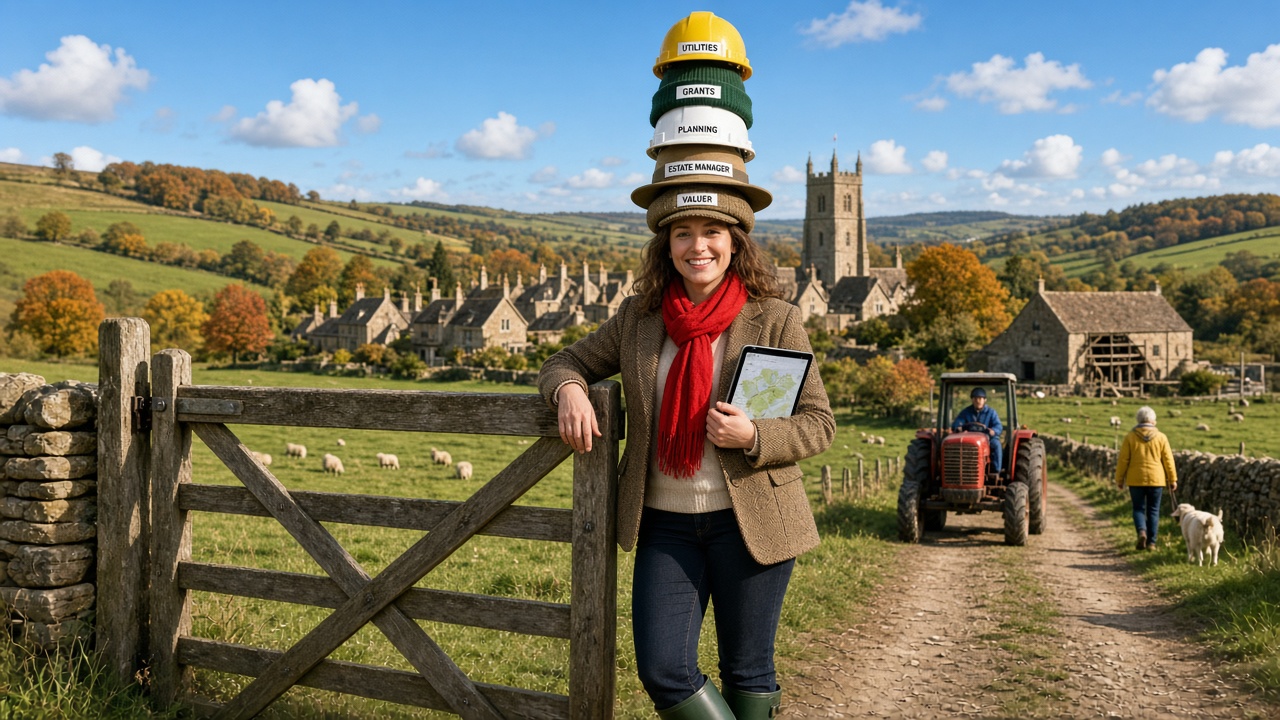
What UK land agents and rural surveyors do, from estates to utilities, the RICS and CAAV routes, live 2026 pay from £25k to £60k+, and how to get started.
A land agent (often called a rural surveyor or rural practice surveyor) manages, values, lets and sells farms, estates and rural land for owners. In the UK, graduates typically start on £25,000 to £32,000, chartered rural surveyors earn £40,000 to £55,000, and directors and partners reach £60,000 or more.
If you like the idea of a property career but the thought of an office tower leaves you cold, land agency deserves a proper look. It's one of the few property jobs where a muddy pair of boots in the car is part of the kit.
It's also a corner of property that's quietly short of people. Here's what land agents do, what they earn and how to get in.
What a land agent actually does
Prospects sums the role up as giving "professional and technical advice about land and assets", helping farms and estates make the most of what they own. In practice, the work falls into a few areas:
- Estate management. Running rural estates for their owners: farms, let cottages, farm buildings converted into workshops, and leisure businesses. That can include managing estate staff and dealing with tenant farmers.
- Valuation and agency. Valuing land, farmhouses, crops, machinery, livestock and trees, then selling or letting them. Many land agents also run auctions, sometimes at weekends.
- Diversification and planning. Finding new uses for redundant farm buildings, preparing planning applications and representing clients at appeals.
- Grants and the environment. Advising on agri-environment schemes, farming subsidies and conservation.
- Infrastructure and utilities. Negotiating access, easements and compensation when pipelines, power lines, roads or renewable energy projects cross private land. Right now firms advertise specialist roles such as Land Agent – Rural & Utilities for exactly this work.
How is this different from a land buyer? A land buyer works for a housebuilder or developer and finds sites to build on. A land agent usually works for the landowner, looking after the land over the long term, and is just as likely to be advising on a farm tenancy as on a development deal.
A typical week
Expect a mix of office and outdoors. Offices tend to sit in market towns or on the estates themselves, but Prospects notes that "a significant portion of the work is conducted outdoors, regardless of weather or season". You might cover several counties, so plenty of driving is normal.
A week might mix a rent review with a tenant farmer, a cottage inspection, a grassland valuation for a family succession plan and a meeting about a cable route across an estate.
What land agents earn
Here's what published sources and live job ads show:
- Graduate or assistant: £25,000 to £32,000, according to Prospects.
- Experienced, chartered rural surveyor: around £40,000 to £50,000 (Prospects).
- Director or partner: £60,000 or more (Prospects).
Live listings seen on 23 November 2026 back that up:
- Rural Surveyor, National Trust, Pembrokeshire: £33,600 (posted 16 Nov).
- Chartered Surveyor / Land Agent, National Nature Reserves, Natural England, Humber: £41,550 plus a Civil Service pension (posted 19 Nov).
- Rural Surveyor, North Yorkshire: £40,000 to £45,000; Somerset: £42,000 to £50,000; South Wales: £45,000 to £52,500; Senior Rural Surveyor, Northamptonshire: £45,000 to £55,000; West Midlands: £45,000 to £60,000, all on RICS Recruit.
- Property and Planning Advisor, Suffolk: £35,000 to £55,000 (RICS Recruit).
A car or car allowance is common, and Prospects notes that estate-based roles occasionally come with subsidised housing, though that's rare.
Qualifications: RICS and the CAAV
Most land agents qualify through one or both of two professional bodies.
RICS (chartered surveyor). The usual route is an RICS-accredited degree in rural land management, real estate or a related subject, followed by the Assessment of Professional Competence (APC). If your degree is in something else, there are accredited postgraduate conversion courses. You can also earn while you learn: Harper Adams University offers a part-time BSc Chartered Surveyor (Rural) Degree Apprenticeship. Our chartered surveyor guide explains the APC in more detail.
CAAV (agricultural valuer). The Central Association of Agricultural Valuers runs its own Fellowship. Every November, between 150 and 180 probationers sit its two-day practical, written and oral exams at farm-based centres around the country. To pass, you need 65% overall with no less than 60% in any part. Plenty of land agents hold both MRICS and FAAV.
Skills that matter
- People skills first. You'll deal with landowners, tenant farmers, gamekeepers, solicitors, accountants and planners, sometimes in the same day. Tact and patience win more negotiations than cleverness.
- Commercial and financial sense. Reading farm accounts, valuing assets and understanding tax.
- A genuine interest in the countryside. Prospects lists understanding crop varieties and animal breeds among the useful skills.
- A full driving licence. Non-negotiable in practice.
Where AI fits
Land agency is a paperwork-heavy job: tenancy agreements, grant applications, valuation reports and file notes after every site visit. AI assistants such as Grok Bot, Claude and ChatGPT can help draft letters, summarise scheme guidance or turn voice notes into a tidy report. Mapping and drone tools are already standard on many estates. The judgement, the relationships and the signature on the valuation stay with you.
Career path
Prospects notes that once you commit to rural practice, "advancement can be swift". A common path looks like this:
- Graduate or assistant rural surveyor, working towards the APC or CAAV.
- Chartered rural surveyor or land agent, running your own caseload.
- Associate, then director or partner, often heading a regional office.
From there, people move into estate management for a single large estate, public bodies such as Natural England or the National Trust, utility and infrastructure land teams, or agricultural consultancy. Some switch to the development side as a development manager.
How to get started
- Get farm or land experience. Prospects says competition for places is fierce and employers expect relevant experience. A summer on a farm or estate helps.
- Apply for graduate roles early. Bidwells and Howkins & Harrison both advertised graduate rural surveyor roles this autumn, and the National Trust recruits trainee rural surveyors.
- Consider the apprenticeship route if you don't want student debt.
- Join the local CAAV association as a student or probationer for tutorials and contacts.
If you love land, people and a bit of fresh air, this is one of the most rewarding careers in UK property. Browse rural, surveying and property jobs on PropertyRoles and take the first step.