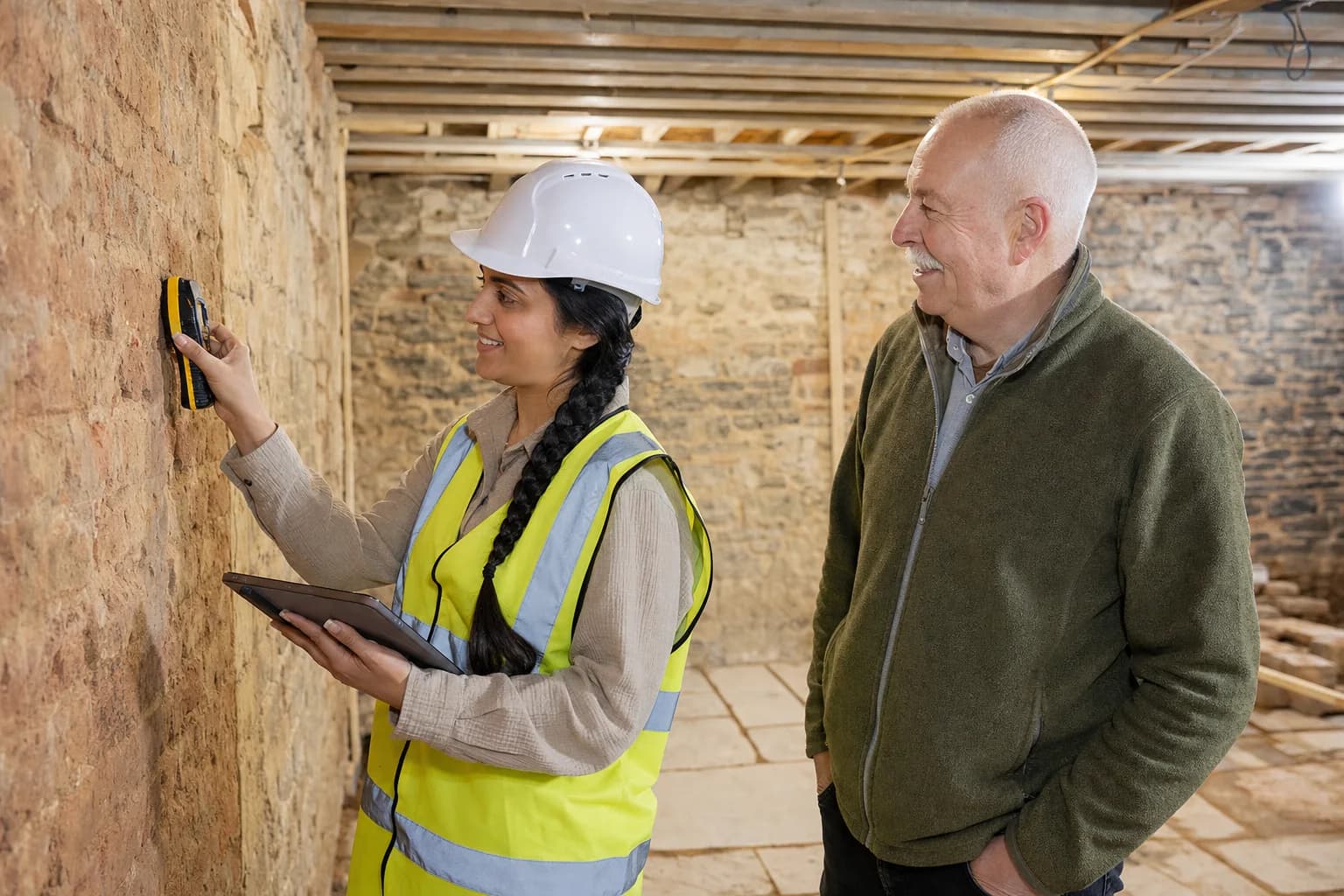
What does a building surveyor actually do?
The core of the job is looking at buildings and working out what is wrong with them. You inspect properties, find structural and other faults, and recommend repairs. RICS lists the main services as building and measured surveys, defect analysis, maintenance and asset strategies, insurance valuations and claims, and managing design and construction. Clients range from a homeowner planning an extension to a landlord with a large commercial estate.
Much of the specialist work grows out of that diagnostic skill. On dilapidations you prepare schedules of condition and dilapidations, then negotiate end-of-lease liability between landlord and tenant. On party walls you act under the Party Wall etc. Act 1996, which covers England and Wales. On projects you write specifications, run contracts and check work on site. You may also advise on fire safety, accessibility and building regulations, and some surveyors give evidence as expert witnesses.
Who employs building surveyors?
RICS says chartered building surveyors work for property consultancies, public sector bodies, organisations that own property, and contractors. Others work in niche areas such as insurance, rights of light and party wall matters. The work spans housing, offices, retail, industrial, leisure, schools and health buildings. Local authorities and housing providers employ building surveyors to look after their stock. Consultancies send surveyors out to private and corporate clients. Plenty of experienced surveyors become partners in private practice or set up as consultants on their own.
How is it different from quantity surveying and building control?
A quantity surveyor deals mostly with money and contracts. The Skills England chartered surveyor standard describes that pathway as negotiating contracts and prices, cost planning, procurement and commercial management. The building surveying pathway is about the physical building: surveying it, spotting defects and advising on repair, maintenance and restoration. The two roles meet on projects, where both may handle contract administration.
Building control is a separate regulated job. In England and Wales, assessing plans, carrying out inspections and advising building control bodies are regulated building control activities. Since April 2024, anyone doing this work must be a registered building inspector with the Building Safety Regulator, and working unregistered is a criminal offence. Registered inspectors work for local authorities, registered building control approvers or the Building Safety Regulator. A building surveyor working for a client is outside that regime, although the National Careers Service names building control as one possible career move.
How do you become chartered?
Most people start with an RICS-accredited degree in surveying, construction or a related subject. Graduates in other subjects can take a postgraduate conversion course. Another option is the Level 6 Chartered Surveyor degree apprenticeship, which has a Building Surveying option. Apprentices complete an RICS-accredited degree while they work, and the end-point assessment is set up to match the RICS Assessment of Professional Competence (APC).
On the Building surveying pathway of the APC you must reach Level 3 in six core competencies: building pathology, construction technology and environmental services, contract administration, design and specification, inspection, and legal/regulatory compliance. Fire safety is a core competency at Level 1. You also pick optional competencies, such as conservation, landlord and tenant, or insurance. Candidates who pass can use the title Chartered Building Surveyor.
Pay
GBP a year, before tax. Ranges run from the 25th to the 75th percentile. They are based on the ONS Annual Survey of Hours and Earnings, April 2026 (provisional), brought up to date with a wage index, and the regional figures are modelled estimates. The National Careers Service quotes roughly £28,000 for starters and £65,000 for experienced surveyors. Chartered status, London work and specialisms such as party walls or dilapidations tend to push pay up. Refer to the Building Surveying salary guide for figures from live adverts.
What you need
- Accredited degreeUsually an RICS-accredited degree in surveying, construction, civil engineering or building engineering. Graduates in other subjects can take a postgraduate conversion course.
- Entry gradesUniversities usually ask for 2 to 3 A levels or equivalent. Higher and degree apprenticeships usually ask for 4 or 5 GCSEs at grades 9 to 4 plus A levels or equivalent.
- English and mathsApprentices without Level 2 English and maths must get them before the end-point assessment.
- RICS APCTo become chartered you pass the Building surveying pathway of the APC, which includes six technical core competencies at Level 3.
- EthicsEvery APC candidate must reach Level 3 in Ethics, Rules of Conduct and professionalism. RICS members are bound by its Rules of Conduct.
- Site readinessYou may work at height, outdoors in any weather and in protective clothing. Some jobs mean nights away from home.
Across the UK
| England and Wales | The Party Wall etc. Act 1996 applies. Notice must usually be served at least two months before work on a party wall starts, or one month for a new wall at the boundary or for excavation. |
|---|---|
| Scotland and Northern Ireland | The Party Wall etc. Act 1996 does not apply here, so statutory party wall work under that Act is limited to England and Wales. |
| England and Wales (building control) | Anyone carrying out regulated building control activities must be a registered building inspector. Classes 2 and 3 require a competency assessment from an approved scheme. |
How to get there
- EntryChoose a routeTake an RICS-accredited degree, a Level 6 Chartered Surveyor degree apprenticeship (Building Surveying option), or a postgraduate conversion course if your degree is in another subject.
- Early careerStart as a trainee or technicianAssist with inspections, take records and help prepare reports and schedules of condition and dilapidations. Surveying technicians with a foundation degree or HND can study on the job.
- TrainingBuild APC experienceGain experience in building pathology, inspection, design and specification, contract administration and legal compliance, and record it against the Building surveying pathway.
- QualifyingPass the APCPass the RICS assessment and use the title Chartered Building Surveyor. For apprentices, the end-point assessment is aligned with the APC.
- ExperiencedSpecialise or leadMove into project or senior management, or specialise in party walls, dilapidations, conservation or fire safety. You could also become a partner or work as a consultant.
Open now on PropertyRoles.uk


Questions people ask
Is a building surveyor the same as a building control officer?
No. A building surveyor advises a client on a building's condition, defects, repairs and projects. Building control in England and Wales is regulated, and anyone assessing plans or carrying out building control inspections must be a registered building inspector with the Building Safety Regulator.
Do you need a licence to be a party wall surveyor?
The government's explanatory booklet on the Party Wall etc. Act 1996 does not describe a licensing scheme. It says owners who use an adviser should check that adviser's experience and professional qualifications, and that surveyors appointed under the Act must act impartially between both owners.
What does a building surveyor do on dilapidations?
They prepare schedules of condition and dilapidations, which record the state of a property and the repairs a tenant may owe under the lease. They then negotiate end-of-tenancy liability with the other side's representatives and advise the client on settlement.
Can you become a building surveyor through an apprenticeship?
Yes. The Level 6 Chartered Surveyor degree apprenticeship has a Building Surveying option. Apprentices complete an RICS-accredited degree, and the end-point assessment is aligned with the RICS APC.
What is the difference between a building surveyor and a quantity surveyor?
Building surveyors deal with the physical condition of buildings: surveys, defects, repair and design. Quantity surveyors deal with cost and contracts, including cost planning, procurement, tendering and commercial management.
How much does a building surveyor earn?
Modelled ONS-based figures put the UK median at about £48,900 a year, with the middle half earning roughly £38,300 to £63,100. In London the median is about £59,900.
Sources
- National Careers Service: Building surveyor job profile
- RICS: Building surveying pathway guide, December 2025
- Skills England: Chartered surveyor (degree) apprenticeship standard ST0331
- GOV.UK (Building Safety Regulator): Registered building inspectors
- GOV.UK: The Party Wall etc Act 1996 explanatory booklet