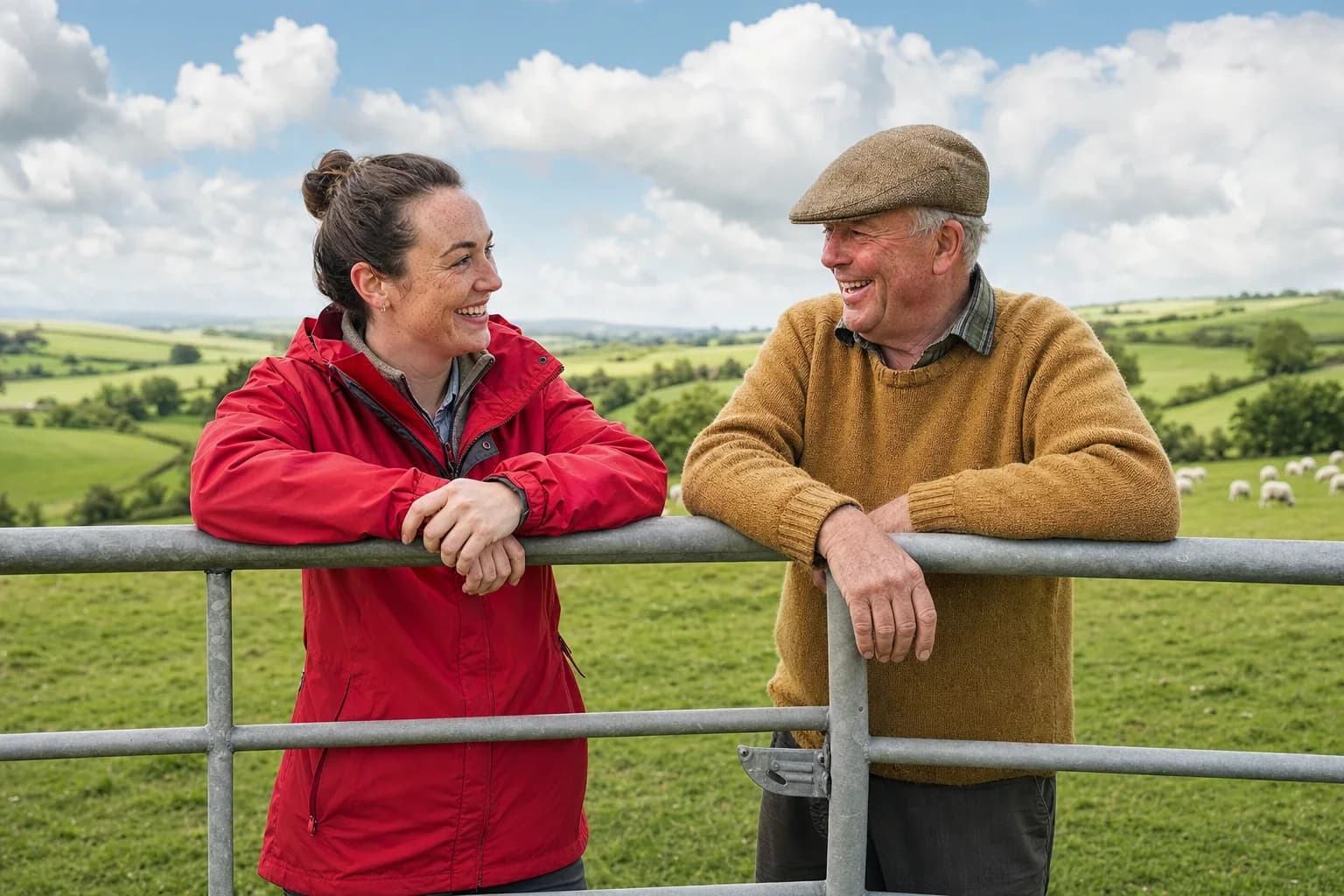
What does the job involve day to day?
A land agent looks after rural property for whoever owns it: a family estate, a farmer, a charity or a public body. The National Careers Service lists the core tasks. You survey and value land, farms and rural buildings. You negotiate leases and rent reviews and handle contract disputes. You advise on legal and tax questions, manage planning applications, prepare financial forecasts and look at whether land could be reused or redeveloped. Expect to drive a lot, spend time outdoors in any weather, and attend some evening or weekend appointments.
Tenancies make up much of the work. RICS expects rural candidates to prepare and negotiate tenancies under the Agricultural Holdings Act 1986 and the Agricultural Tenancies Act 1995, alongside Housing Act lets and business leases under the Landlord and Tenant Act 1954. Diversification is another big strand. That means testing whether a barn conversion, a holiday let or another new enterprise makes sense, through feasibility studies, financial appraisals and planning appraisals. Agents also advise on agri-environment schemes and the grants available to protect landscape, habitat and natural resources.
Which qualifications matter: RICS or CAAV?
Most land agents aim to become chartered surveyors through the RICS Rural pathway of the APC. Its current guide is dated December 2025. You pick one core competency to Level 3 from four: agriculture, management of the natural environment and landscape, property management, or valuation. You then take further optional competencies, including landlord and tenant, land use and diversification, auctioneering, forestry, compulsory purchase, and access and rights over land. Agriculture is compulsory to at least Level 2. If you qualify this way you can call yourself a Chartered Surveyor. There is also an Associate Land pathway at AssocRICS level.
The Central Association of Agricultural Valuers (CAAV) awards Fellowship, with the letters FAAV, to people who pass its practical, written and oral exams. FAAV brings legal privileges. Fellows have the legal privilege of preparing tenancy agreements and other documents for Farm Business Tenancies, and they can prepare disposal reports for charities. The CAAV says many probationers sit its exams in the same period as the RICS APC. Holding both qualifications is common in rural practice.
Who employs land agents?
Most work in private surveying and land agency practices, which manage estates and farms for clients and run sales and auctions. Sworders, for example, has advertised rural surveyor apprenticeships. Others work directly for a landed estate. Public bodies hire land agents too. Forestry and Land Scotland has advertised an Assistant Area Land Agent role in its commercial development team, which handles renewable energy schemes, phone masts, mineral extraction, residential property, agricultural leases, and buying and selling land. With experience you can specialise in an area such as valuation or sales, become a partner, or set up as a consultant.
How do you get started?
There are three main ways in. You can take a degree accredited by RICS or approved by the CAAV. Employers also accept related subjects such as rural estate and land management, geography or land use. If your first degree is in another subject, you can take a postgraduate conversion course. The second route is the Level 6 Chartered Surveyor degree apprenticeship. It takes around five years, and you usually need four or five GCSEs at grade 4 or above plus A levels. The third route is a graduate training scheme with a surveying practice. A driving licence is close to essential.
Join the CAAV early. Student membership costs £35 including VAT. Once you start work, you move up to Probationer membership, which needs a proposer and a seconder who are both CAAV Fellows. Degree apprentices pay a reduced subscription. To sit the exams you need 24 hours of CAAV tutorials within the qualifying window. The full exam costs £495, and you pass with 65% overall and at least 60% in every part.
Pay
GBP a year, before tax. Ranges show the 25th to 75th percentile of the surveying anchors from ONS ASHE April 2026 (provisional), moved to 2026 with a wage index. Regional figures are modelled. ONS does not count land agents as a separate group, and some are classed with estate agents, so treat these as a guide only. The National Careers Service gives £26,000 starting to £50,000 experienced for rural surveyors. Chartered status, FAAV and partnership push pay up. Refer to the Surveying salary guide for figures from live adverts.
What you need
- Degree or apprenticeshipA surveying degree accredited by RICS or approved by the CAAV, a related degree plus a conversion course, or the Level 6 Chartered Surveyor degree apprenticeship.
- RICS Rural pathwayChartered status needs one core competency to Level 3 plus optional competencies. Agriculture must be reached to at least Level 2.
- CAAV Fellowship (FAAV)You must pass the CAAV's two-day practical, written and oral exams, held every November. The pass mark is 65% overall with at least 60% in each part.
- CAAV tutorialsFor the 2026 exams, candidates needed 24 hours of tutorials attended between 1 September 2023 and 31 October 2026.
- Driving licenceTravel to farms, estates and clients is constant, so a licence is likely to be needed.
- Rural and legal knowledgeYou need to understand farming systems, agricultural tenancy law, planning and valuation, and be able to explain them clearly to clients.
How to get there
- Year 0-5Study or start an apprenticeshipTake an accredited or approved degree, or start the Level 6 Chartered Surveyor degree apprenticeship with a rural practice. Join the CAAV as a student or apprentice probationer.
- First jobBecome a CAAV probationerOnce working, join a CAAV Local Association with a Fellow as your proposer. Probationer membership runs for six years and can be extended if you intend to sit the exams.
- Year 1-3Gain supervised experienceBuild broad rural practice: tenancies, valuations, sales, auctions and farm management. The CAAV suggests at least a couple of years in practice before you sit its exams.
- Year 2-4Sit the APC and the CAAV examsApply to the CAAV by 31 August for the November exams. Many candidates take the RICS APC on the Rural pathway in the same period.
- Year 3-5Qualify as MRICS and FAAVYou can use FAAV as soon as your results letter arrives. Results are sent before 20 December.
- Year 5+Specialise or progressMove into senior land agent, partner or consultant roles, or specialise in an area such as valuation and sales.
Open now on PropertyRoles.uk


Questions people ask
Is a land agent the same as a rural surveyor?
In practice, yes. The National Careers Service uses the title rural surveyor and lists agricultural surveyor as another name for it. Land agent is the traditional title used on estates and in rural practices.
Do I need to be chartered to work as a land agent?
No law says you must be chartered to manage rural property. Most employers still expect you to work towards MRICS on the Rural pathway, and many also want FAAV. FAAV gives you the legal right to prepare tenancy agreements and other documents for Farm Business Tenancies.
When are the CAAV exams and what do they cost?
They run over two days every November. In 2026 they take place on 11 November (practical) and 12 November (written and oral). Applications closed on 31 August. The full exam costs £495, a written-only resit costs £205 and a practical and oral resit costs £290.
What happens if I fail part of the CAAV exam?
You can resit the part you failed within the next three years. If you have not passed it by then, you have to sit every part again.
Can I become a land agent without a surveying degree?
Yes. Employers accept degrees such as geography, rural estate and land management, or land use and environmental management. Graduates in unrelated subjects can take a postgraduate conversion course or join a practice's graduate training scheme.